Welcome to Library Lions interviews. Raising a Roar for Libraries

Welcome to Library Lions interviews. Raising a Roar for Libraries
Showing posts with label Banned Books Week. Show all posts

Sunday, September 21, 2014

ROAR FOR BANNED BOOKS WEEK

 Library Lions Roars for BANNED BOOKSWEEK one of our favorite posts of the year!


Adult/Teen Librarian Danielle Dreger-Babbitt from Mill Creek Library WA is here with us this week. Welcome Danielle.

Tell us about Banned Books Week
Banned Book Week was started 32 years ago to celebrate the freedom to read after more and more books were being challenged in libraries and schools. According to the American Librarian Association, over 11,000 books have been challenged since 1982. Over 200 of them happened in 2013! You can learn more about Banned Book Week on the ALA website.

What do you do to spread the word about Banned Books Week and Intellectual Freedom Issues?
I do a banned book display each year.  My favorite displays are the ones I did in 2011 when library patrons wrote about their favorite banned books and the 2012 display that took up a whole shelving unit. I love being able to showcase these banned and challenged books.


Along with each year’s display, I include Banned Book lists and pamphlets as well as bookmarks and buttons for library customers to take home. We’ve had essay contests where readers write about their favorite challenged or banned books and win copies of banned books. When I visit the middle schools to talk about books in the fall I often bring along books that have been challenged from other parts of the country and have the students guess why they might be banned or challenged.


Readers Roar: (Let’s hear what teens have to say about banned books)

“If people read the books before they banned them, they might have a better understanding of why the book is important. If you ban a book, it only makes me want to read it more.”- Jessica, Grade 11

 
Any Banned Books you would like to highlight?
Some of my favorite banned and challenged books include Persepolis by Marjane Satrapi, Shine and TTYL by Lauren Myracle, and 13 Reasons Why by Jay Asher.  And my absolute favorite banned/ challenged book is Hunger Games by Suzanne Collins. Most teens are amazed to hear that it has been taken out of some schools and libraries!

 
What can Library Lions blog readers do for Banned Books Week?
Readers can celebrate their freedom to read by reading one or two banned or challenged books during Banned Book Week. Bonus points for reading these all year long, not just in September and for sharing these titles with their friends and family.

Note from LL host, Janet Lee Carey: I’d like to also add that you can tweet about the banned books you’re reading. Use the hashtag #bannedbooksweek. And if you want to do a temporary profile pick change as I did below, go to this site Support Banned Books Week 

 
My twitter profile: Photo by Heidi Pettit. Poster added on the site link above.


ONE LAST BIG ROAR
The best way to support libraries is to use them! Check out books and DVDs and CDs, use the databases to find information, and attend as many library programs and events as your schedule allows. By doing these, you are showing us that you think libraries are important. There are many ways to give back to your library. Consider becoming a volunteer or join the library board or Friend’s Group.  Teens can join the library’s Teen Advisory Board and help make decisions about future library programs and purchases. You can also donate books to the library for the Friends of Library Book Sale. The money from these sales supports library programs and special events!
 
About our Guest Post librarian, Danielle Dreger-Babbitt
I’ve been a teen librarian for over 10 years and have worked in libraries in Massachusetts and Washington. I’ve been an Adult/ Teen Librarian at the Mill Creek Library for over 5 ½ years.


I’ve been active in ALA’s YALSA 
(Young Adult Library Services Association) for the last decade and have served on committees including Outreach to Teens With Special Needs, The Schneider Family Book Award, and most recently The Alex Awards, for which I was the 2014 committee chair.


In my spare time I write for children and teens. I love to read YA and MG fiction and cooking memoirs/ cookbooks. I own two cats and two badly behaved (but adorable) dogs. I also love to travel and recently visited Uruguay, Brazil, and Argentina.

Let’s Link:
Sno-Isle Teen Blog

Thanks again for the terrific Banned Books post, Danielle!

Love Libraries? Give a Roar in “Comments” below.

~Note to Librarians: If you’re a Youth Librarian working in a school or public library we’d love to hear about you and your library. Contact Janet at jlcarey@hotmail.com for an interview slot. The calendar for 2015 is currently wide open J

~Note to Authors: If you’re interested in Roaring for Libraries on this blog, contact Janet at jlcarey@hotmail.com for an interview slot. 


Thursday, October 4, 2012

ROAR FOR BANNED BOOKS WEEK

Welcome to Library Lions Special Edition Spotlight. Teen Services Librarian, Hayden Bass, is here to Roar for  Banned Books Week. Welcome Hayden!


What’s your deal?
I am a Teen Services Librarian Seattle Public Library, Central--also known as “that big glass thing downtown.”


It’s a fun place to work because the interesting architecture gets people excited about libraries. It helps us re-imagine what libraries can be. I pretty much have the best job on earth because I get to work with teens every day.


I lead a fantastic teen advisory group that blogs, reviews books, creates videos and podcasts, and generally tells us how we should run the library. They always impress me with their great ideas and articulate, thoughtful discussions. I also visit schools to teach students how to do good research, or to talk about good books.
 
Recently I joined our Social Media Team, which means that I get to Tweet  and  Facebook  the library. And I love creating personalized reading lists through our Your Next 5 Books service.
What’s the deal with these banned books?

So, first let’s get the definitions out of the way:  A “challenge” is an attempt to remove or restrict access to materials, while a “banned” book has actually been removed from access.
Every year, dozens of books—many of them written for teens or children— are challenged or banned.


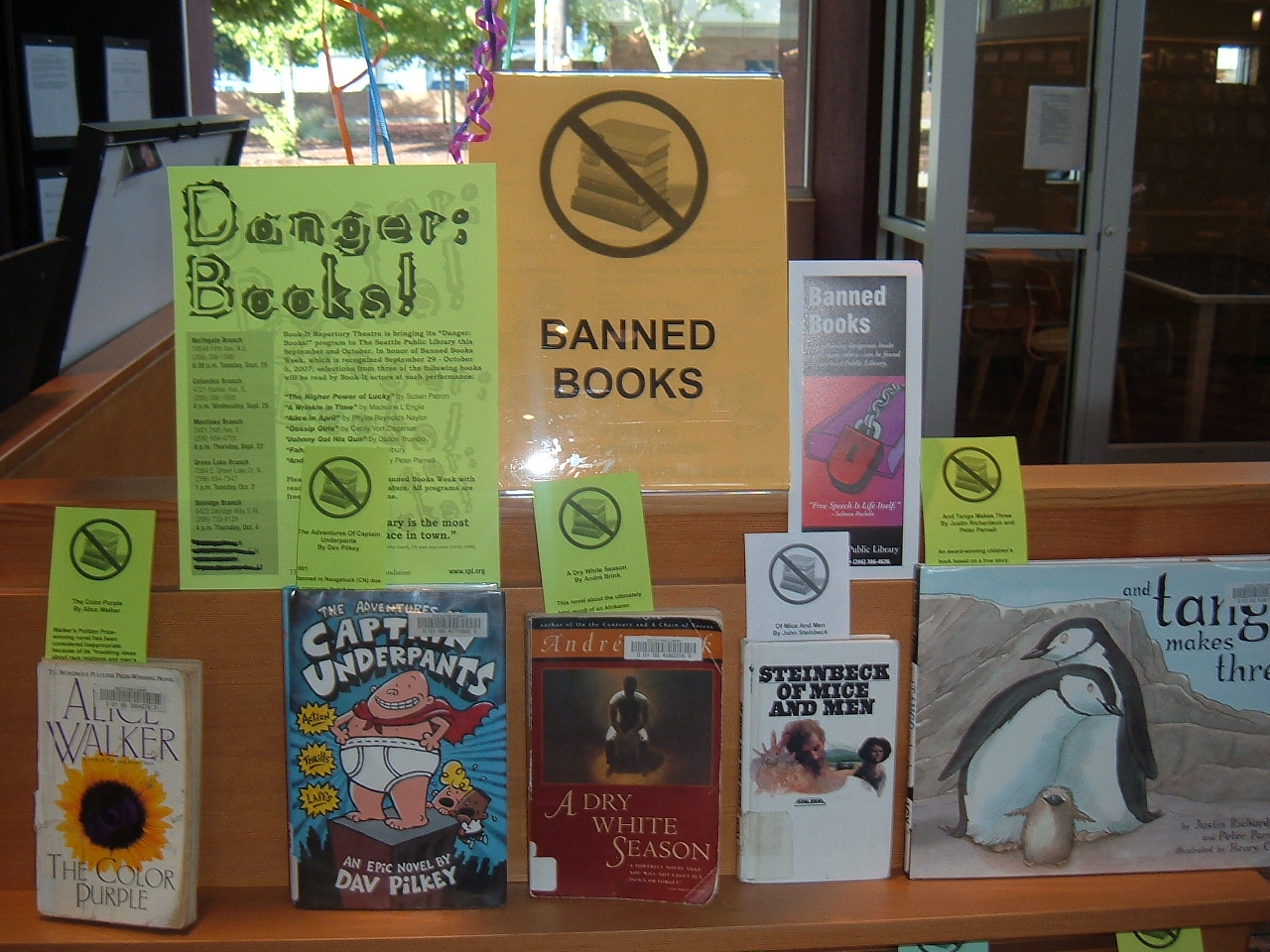
(Banned Books Display Seattle Central Library)

Why should we care? Because we all have a First Amendment right to the freedom to read, and freedom of access to information. Librarians, publishers, journalists, teachers, and readers everywhere all come together during Banned Books Week (now in its 30th year!) to call attention to censorship. We advocate for your right to decide what you want to read about, and how you want to learn.
 
Plus, librarians love a good fight.  (Not really!  Well, kind of.)
 

In any good library, there’s something to offend everyone. There are many books in my library that I don’t like. I might find them racist, sexist, homophobic, or just plain dumb. But that doesn’t mean I’m allowed to remove them.  If we all removed all the books we didn’t like from the library, how many would be left?


How do you spread the word?
Besides creating displays (Like these, done by Erica Delavan and Janie Arnold at our Northeast Branch).  


(Erica Delavan and Janie Arnold)  
and blogging about banned books, librarians sometimes visit schools and other places in the community to talk about the freedom to read.  I ask students who THEY think should get to make these decisions.  The government? The library? Would they let their younger brother or sister read anything they wanted? Why or why not?

This is a complicated and difficult issue.  We all have to decide for ourselves what the right answers are.

What can Library Lions readers do to roar for Banned Books Week?
Think! Take a few minutes to ponder: Why is it important to stop censorship? What will happen if free access to information is lost?

When you’ve done that—and maybe started a conversation with a friend or two—make sure you use and support your library.

We often hear that libraries are no longer important because everything is on the Internet.  But you know what?  It’s not true. Most good, factual information—from newspapers, journals, and books—is not available online! That’s because this stuff costs money, so publishers don’t give it away for free.  The only place to get it for free is your local library.  And the people protecting your right to access that information? Your local librarians.

Without libraries, only the wealthy would be able to afford access to ALL of the very best books and information.

Highlighted banned books
People are often surprised that children’s picture books are constantly being challenged and banned.


The Carrot Seed is a classic by Ruth Krauss published in 1945. A little boy faithfully waters and cares for a carrot seed, despite the fact that his elders tell him it probably won’t grow—resulting in a lovely big fat carrot. This book has been attacked for showing “contempt for authority, and in particular . . . children not respecting their parents.”


Maurice Sendak’s much-beloved Where the Wild Things Are has been challenged for “having witchcraft, supernatural elements, and a child who yells at his mother.”
Most of us agree that these are books we think children should have access to. However, there are some children’s books that I personally would rather not see in the library! For example, here’s a book that I personally wouldn’t mind banning:


This is a children’s book that portrays homosexuality as a psychological problem that can be “cured.” This book was challenged at The Seattle Public Library in 2003, but was retained as representative of an alternative view of homosexuality.

Do I think this a wonderful book? No.

Do I defend everyone’s right to access it anyway? You bet.
Thanks, Hayden for your inspiring Roar for Banned Books Week! Since Banned Books only lasts a week, we'll keep this post up until mid October to make the roar last.
Note to Readers: Love Libraries? Give a Roar in “Comments” below.
Note to Librarians: If you’re a Youth Librarian working in a school or public library we’d love to hear about you and your library. Contact Janet at jlcarey@hotmail.com for an interview slot. 


Sunday, September 25, 2011

BANNED BOOKS WEEK!

Welcome to Library Lions special edition Banned Books Week.


Lesley James, librarian at Douglass-Truth Branch of the Seattle Public Library is here to Roar for Banned Books Week. Welcome Lesley!


The Skinny: First tell us a little about yourself and your library


We have an awesome after-school Homework Help program at my branch, thanks to the amazing volunteers who spend two to four hours each week helping students of all ages. The students deserve a lot of credit, too, for wanting to learn and for helping each other. I keep things bubbling along by orienting the volunteers, organizing the schedule, etc.

I’ve been a librarian for eleven years. One of my favorite things to do is visit schools to do presentations on information literacy and the research process. Sometimes classes of English Language Learners or special education students visit the branch for a presentation on “How the Library Is Organized.” I also love doing good old-fashioned booktalks and enjoyed working with a nearby school where I taught students how to do their own booktalks so they could share their favorites with their classmates.

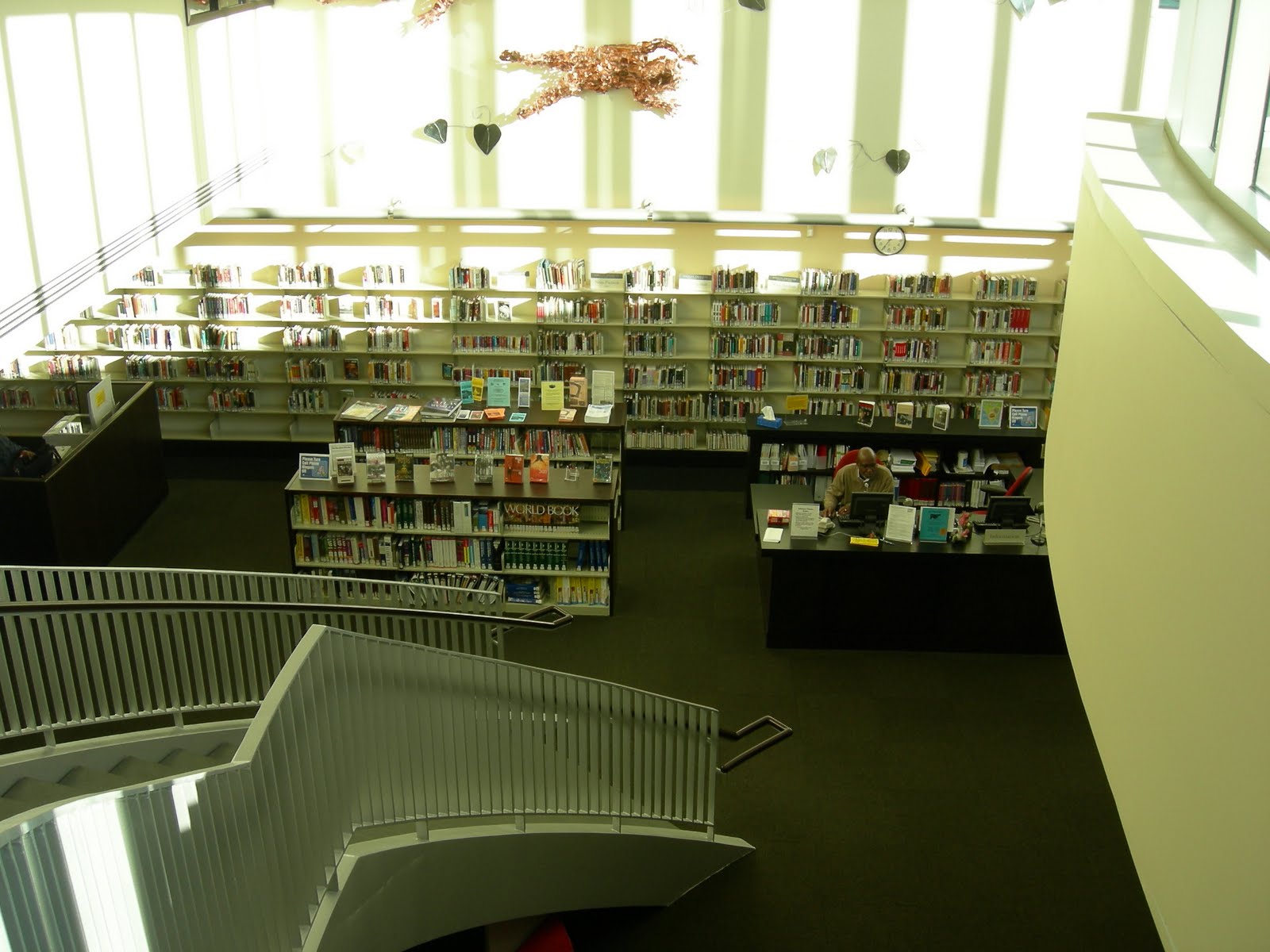
Douglass-Truth Library interior


For many years, several branches worked together to hold a “Reading Marathon” that pitted four middle schools against each other to see which could log the most reading time in a six-hour period. Because of budget cuts and staff reorganizations, this year the competition was between the three grades from one middle school and held at just my branch, but the participants still had a great time eating snacks, winning raffle prizes, and, of course, reading.

Tell us about Banned Books Week:


Banned Books Week is that special time of the year when librarians get together and ban as many books as possible…just kidding! (Although teens are sometimes confused by the name.) The serious fact is that every year books are removed from the shelves of libraries when library staff responds to patrons’ official complaints by choosing to censor. Librarians and other educators who consider themselves staunch supporters of the First Amendment want to bring this to the attention of the public so they can appreciate their Freedom To Read. It’s also a great opportunity to examine the issues and emotions that prompt those complaints and the prices we sometimes pay for having the freedom.


It surprises some students to learn that there are books I hate—but I make it clear that I’ll defend the rights of those books to be on the shelves of the library with my last breath. That’s what makes the Freedom To Read so powerful: it’s not a simple or easy thing to defend, but it’s worth it.


Learn more at the American Library Association site:

Can you showcase some more displays for us?
There are great displays at every branch of The Seattle Public Library system.


What do you do to spread the word about Banned Books Week and Intellectual Freedom Issues?
When teachers invite me to do a presentation on intellectual freedom for their classes, I do a lesson on the “competing goods” of the Freedom To Read. I start by showing the students the text of the First Amendment and then I show them a newspaper photograph and tell them this is a picture of the First Amendment in action. We discuss what’s going on in the photograph: an African-American woman is crouched defensively over a white man who became the target of a group of violently angry people who turned up to protest a Ku Klux Klan march. Why would this woman protect a Klan member whose speech is filled with such hate for her race? Because she believes in his right to speak, no matter what he’s saying. The protesters have an equal right to voice their opinion, but not to silence his. It’s a compelling image that helps students understand the gravity of defending free speech, even when you completely disagree with it.

Next, we do an activity that involves small groups of students looking at children’s picture books that have been challenged in the past and guessing what the challengers objected to. We use picture books because they’re easier to flip through than young adult novels, they lead to a later discussion about age restrictions, and they elicit cries of, “But I love the Lorax!” By the way, I want to give credit to the Multnomah County Library System librarians—I observed a version of this activity led by them at a conference and adapted it.
PHOTO cover The Lorax

Some of the reasons for challenging seem silly to the students (such as the bottle of wine in Little Red Riding Hood’s basket for her grandmother leading to alcoholism) but others are more serious (such as the use of racial slurs in Roll of Thunder Hear My Cry). The important thing I want students to understand is that they all represent someone’s personal values. Whatever their personal values are, the students always bring up the point that it’s good to have books that represent different opinions. If we removed every book that offended someone, there would be no books left on the shelves! The students also agree that that depicting a particular behavior doesn’t necessarily condone it and that it’s better to show reality as it is, rather than trying to shield readers from harsh truths.
We do a couple of other activities during this lesson and I’d be happy to share them, as well as details about the activities described above.

Any Banned Books you would like to highlight?
I’d like to highlight some hometown heroes. Three local (Seattle or Seattle-adjacent) authors of books for teens are represented in the American Library Association’s “Books Banned or Challenged in 2009-2010” booklet: Sherman Alexie, Brent Hartinger, and Richelle Mead. Alexie’s The Absolutely True Diary of a Part-Time Indian was challenged but retained on a school summer reading list. (It’s important to note that many challenges fail to lead to a banning.) The objections focused on “vulgar and racist” language. So many teens, especially boys, have read and loved this book.


You could have a great discussion about the difference between being racist and depicting racism with these readers. Hartinger’s Geography Club was retained at a public library despite complaints that it was “obscene or child pornography.” (In 2005, it was banned and then reinstated by a nearby school district, although the focus that time was a scene in which the protagonist arranged to see someone he met online.) This book also provides a great opportunity to talk about the difference between gratuitous sex scenes and sex scenes as an important part of the plot—or, in this case, books in which characters think about sex but don’t actually have it but are still considered “pornography.”


Mead’s entire Vampire Academy series was banned at a junior high school for “sexual content or nudity,” including books which have not yet been written. It’s true that schools don’t have the same responsibilities as public libraries to protect the freedom to read, but that doesn’t mean they should go ahead and ban books without reading them first!

What can Library Lions readers do to roar for Banned Books Week?
Support your local public library! We love our volunteers and appreciate every penny that’s donated, but most of our essential functions can only be funded by the city or county government’s budget. When times get tough (as they are right now), tough decisions have to be made about those budgets. It’s crucial that city and county governments know that public libraries are a vital service to their communities.

Yes, a lot of people get their information online these days, but where do people go when they don’t have computers or the skills to navigate the increasingly complex world of online information? The library, of course. We are actually more needed than ever. Our buildings are bursting with job-seekers, recent immigrants, and students of all ages who need help with their homework. They may be the only places where children hear stories read to them, elderly people figure out how to use a computer mouse, or someone who’s having a bad day sees a smile. And our local governments need to know all this so they don’t put us in the same pile as the parks and the art projects that are awesome but tend to lose their funding more rapidly than the police and fire departments.

One More Library Lion’s Roar:
I’d also like to put in a plug for the profession of librarianship, which seems especially relevant at a time when we’re celebrating the First Amendment. It’s true you don’t need a master’s degree to do a lot of the things we do these days (if I had a dollar for every printer I’ve un-jammed, I could have retired by now) and that what we bring to our work is somewhat intangible. But intangible doesn’t mean unimportant. Librarians hold back the forces of censorship with one hand and welcome everyone—and I mean everyone—into the library with the other. Without us, freedoms would get chipped away, both the freedom of ideas to enter the public space and the freedom to gain access to those ideas, regardless of your skills or resources. Interest in those ideals led me to library school and by the time I left, they were tattooed on my soul.

Let’s Link!Teen

Blog: http://blog.spl.org/yablog/

Adult Blog: http://shelftalk.spl.org/

Facebook: https://www.facebook.com/SeattlePublicLibrary?ref=ts
Thank you, Lesley for your terrific interview!

Love Libraries? Give a Roar in “Comments” below.

Note to Librarians: If you’re a Youth Librarian working in a school or public library we’d love to hear about you and your library. Contact Janet at jlcarey@hotmail.com for an interview slot.

Saturday, September 25, 2010

BANNED BOOKS WEEK

Welcome to Library Lions BANNED BOOKS WEEK Special Edition! Please Roar today’s guest Lynn Miller, Teen Librarian at The Seattle Public Library, Ballard Branch.


First a bit about our Guest:
Lynn has worked 10 years as a Teen Services Librarian. She says, I am the luckiest librarian because of my colleagues at Ballard Branch. We work in concert to serve 1000- 1500 patrons a day at the busiest branch library in Seattle. Serving a teen well means being sure you already served them as children, serving their parents, serving their teachers, schools and community, and being prepared to continue to serve them as adults.

Tell us about Banned Books Week:
Every year in September libraries and book stores have the unique opportunity to remind their patrons of how precious their 1st Amendment right is by celebrating Banned Books Week and the Freedom to Read.

It is a time to feature Big Ideas, stir up conversation, even controversy. When each person stops to think about it he or she has a unique idea of what the 1st Amendment means.

American Library Association is a professional library organization that established and supports Banned Books Week in lots of ways.

If you are asking yourself “What is Banned Books Week?” Check out this Banned Books Week ALA page


Or take a look at the Banned and Challenged List for 2009-2010


What is your library doing for Banned Books Week?

Displays!!


We always do displays at the front of the library. But these are not passive displays!


Do your homework and be prepared for discussion. In some states or in some library settings, a Freedom to Read display might in itself be questioned or censored.


A display can be as simple as a collection of banned and challenged titles with custom Post-it notes on them, such as, “What would you do if someone said you couldn’t read this book?” (There is a Glue Stick product that can turn any piece of paper into a Post-It note.)

A few years ago, a librarian took some poor condition gift books that would have been recycled and altered them for a display that has turned out to be the biggest conversation starter imaginable. He put a copy of Harry Potter in a jar; he bolted them, locked them up, etc. This has stopped our library patrons in their tracks.


Book-It Program Danger: Books!
Finally, for over ten years Seattle Public Library (with funding from the SPL Foundation) has collaborated with Book-It Repertory Theatre and Seattle Schools to bring Book-It's show Danger: Books! to about twenty Seattle middle and high schools.

This year Book-It performed selections from On the Devil’s Court by Carl Deuker, Olive’s Ocean by Kevin Henkes and The Land by Mildred Taylor at Salmon Bay School, my neighborhood school.

Following the performance 250 7th & 8th graders discuss censorship and the 1st Amendment. Each year after the discussion ends, I am re-inspired by these young minds and am proud to be a Teen Services librarian.

Any Banned Books you would like to highlight?
Geography Club by Brent Hartinger is a title that appears on the most recent list of Challenged and Banned books. Very well-told story. And scary. And powerful. We have countless books on our shelves of heterosexual romance among teenagers. But this story crosses the line and tells a different kind of story, equally real.

I mention it because I am proud of the West Bend Community Memorial Library, West Bend, Wisconsin for retaining it despite a month’s long campaign to remove. Both sides exercised their 1st Amendment rights. This is how the discussion should take place in a community. Fortunately, the book was retained and readers were able to then choose to read it or not read it and decide for themselves.

What can Library Lions blog readers do for Banned Books Week?
How to celebrate Banned Books Week?
For myself, I try to read and understand a little more each year about the issues of censorship. Intellectual Freedom is central to our work. As you get sensitized to the subject, one reads the news with an eye to how infringements on the Freedom of Speech and Freedom to Read play a bigger role in our life than we might at first think.

I also make a point to read a challenged or banned book each year. There are so many to choose from! Most amazingly great literature.

For a Library? Make a display of banned and challenged books or create a booklist. If you have time and support for programming: invite community members to read Banned and Challenged books or organize a discussion led by your local chapter of the ACLU.

Readers Roar:
Middle school and high school students are at a wonderful age to think about and appreciate their rights. Their first question is “That was banned?” Followed by “How can a book be banned with the Internet?”

Pretty soon they understand that our 1st Amendment allows us to challenge books and also protect books from being banned. Rights get complicated very quickly. They love speculating about the subject of censorship!

Library Lion’s Roar: ONE LAST ROAR FOR BANNED BOOKS WEEK
"After Danger: Books! performed at Salmon Bay School this week a 7th grader from the school came into the library. He recognized me from the morning and thanked me for the presentation. Then said: “I think I would like to read On the Devil’s Court.”

I love connecting young people with books they might like to read. Whatever it takes.

Here’s a way to connect Library Lions Blog readers, try the Push to Talk
The SPL Teen Blog
Seattle Public Library Facebook

Thank you, Lynn, for the Special Edition for Banned Books Week!


Love Libraries? Give a Roar in “Comments” below.

Note to Librarians: If you’re a Youth Librarian working in a school or public library we’d love to hear about you and your library. Contact Janet at janetleecarey@hotmail.com for an interview slot.